

Digital art customization is redefining how personal expression shapes the modern home. The fusion of technology with creativity lets you design living spaces that are both interactive and uniquely yours. With tools like generative AI, advanced animation, and emotion recognition, affluent homeowners now enjoy art that evolves with their mood and environment. Personalized digital art brings together innovation and emotional connection, giving you full creative authority over decor that truly reflects your identity.
Table of Contents
- Digital Art Customization Explained
- Types of Personalized Digital Art
- How AI Enhances Art Interaction
- Privacy and Control in Digital Art
- Comparing Digital and Traditional Customization
Key Takeaways
| Point | Details |
|---|---|
| Digital Art Customization Transforms Creativity | Digital art customization enables highly personalized and interactive artwork that evolves based on individual emotions and preferences. |
| AI Enhances Viewer Interaction | AI-driven digital art learns and adapts to users’ emotional states, creating a dynamic engagement experience. |
| Privacy and Local Control are Essential | Choosing platforms that process data locally ensures that personal images and memories remain secure and private. |
| Hybrid Art Approaches Combine Strengths | Combining digital and traditional art methods can yield unique pieces that offer both interactive elements and tactile authenticity. |
Digital Art Customization Explained
Digital art customization represents a fundamental shift in how creative expression takes shape today. Unlike traditional art that relies on brushes, canvas, and physical materials, [digital art customization] leverages computers, software, and specialized digital devices to create highly personalized visual expressions. Think of it as having an infinite palette at your fingertips, where the medium itself adapts to your vision rather than constraining it. This process combines technology and creativity in ways that traditional artists could never achieve, opening doors to interactive, dynamic, and deeply personal artwork that evolves with your mood and your space.
At its core, digital art customization enables you to create unique pieces that reflect your individual identity and emotional narrative. [Artists leverage digital tools and technology] to produce work that goes far beyond static images. With tools like generative AI, advanced animation software, and emotion recognition technology, your digital art can respond, adapt, and interact with you and your environment. Your family portrait transforms into something alive with movement. Your favorite landscape animates with subtle shifts that match the time of day or your emotional state. The creativity becomes a conversation between artist and viewer, where customization isn’t just about selecting colors or filters—it’s about infusing your personality, memories, and identity directly into the visual medium itself.
What makes digital customization particularly powerful for affluent tech-forward homeowners is the convergence of three key elements:
- Advanced software and hardware integration that handles complex technical work automatically, freeing you to focus on creative choices
- Accessibility of professional-grade tools that were once reserved for studios and institutions, now available directly to you
- Personalization at scale where your unique artwork adapts to your space, your preferences, and even your emotional responses in real time
Consider how this differs from buying mass-produced art for your living room. Traditional decor displays the same image every single day. Digital customization means your wall art learns your preferences, responds to your presence, and creates a dynamic visual experience tailored precisely to how you want to engage with it. Whether you’re animating a photograph of your child growing up, transforming a travel memory into an interactive experience, or creating entirely new compositions that reflect your aesthetic vision, customization puts creative control directly in your hands. The technology handles the technical complexity—the rendering, the processing, the frame-by-frame animation—while you maintain complete authority over what your art becomes.
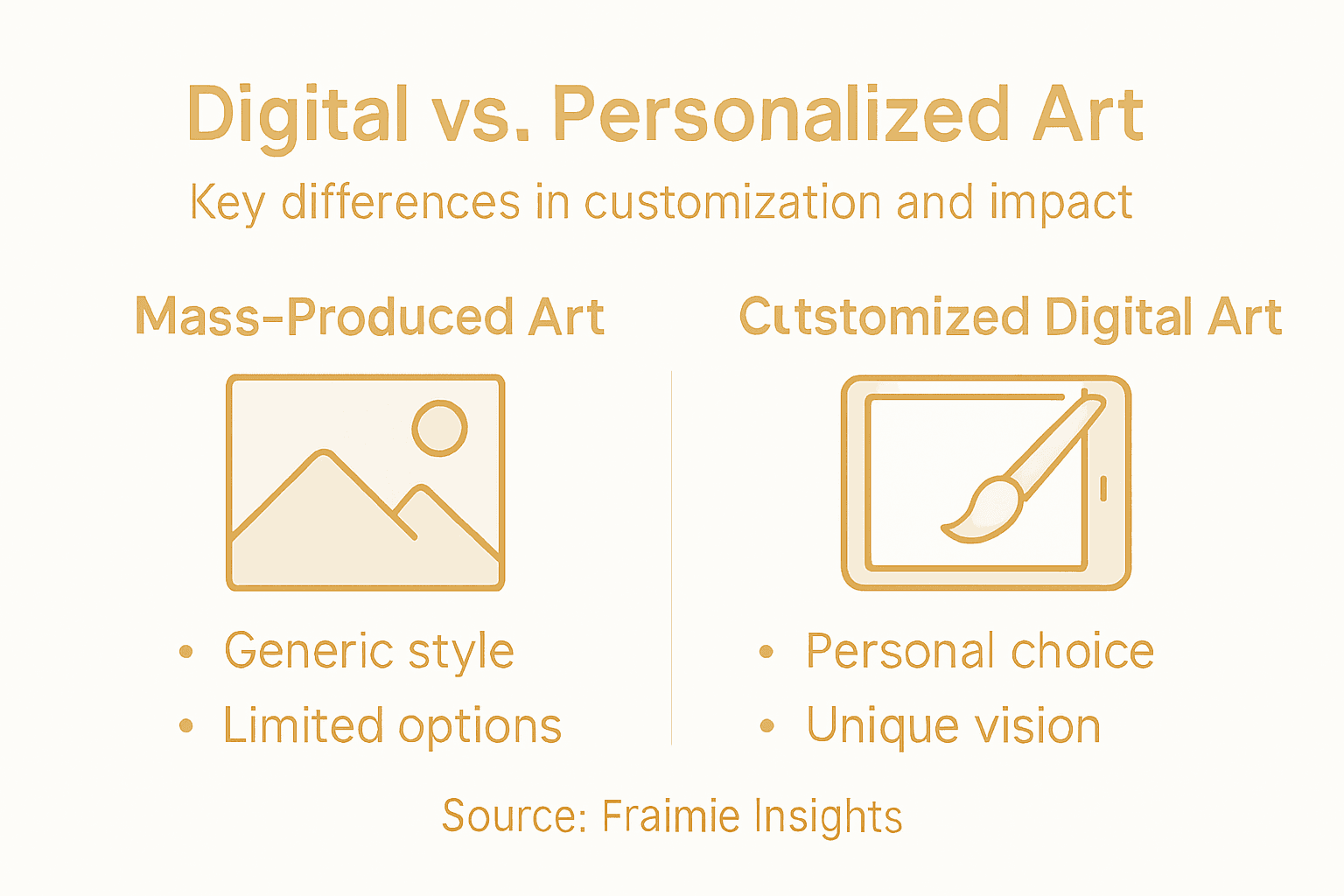
The privacy and security aspects matter significantly here too. Unlike cloud-dependent solutions that send your personal images to remote servers, true digital customization with local processing means your family photos, your memories, and your creative work stay on your device. You maintain ownership and control while experiencing all the advanced technological benefits that make the customization possible in the first place.
Pro tip: Start by uploading one meaningful personal image that holds emotional significance for you—a family photo, a travel memory, or a significant moment—and explore how emotion recognition and animation capabilities transform it into something interactive that responds to your presence in the room.
Types of Personalized Digital Art
Personalized digital art comes in many forms, each offering distinct ways to express yourself and interact with visual content in your home. The range spans from static digital paintings that you customize with your own aesthetic preferences to fully interactive experiences that respond to your presence and emotions. [Digital drawing, animation, and interactive media] all fall under the umbrella of personalized digital art, but they work in fundamentally different ways. Understanding these categories helps you choose what resonates most with your creative vision and your living space.
Animated Digital Art transforms your favorite photographs and compositions into living, breathing visual experiences. Unlike a traditional framed print that remains static, animation adds movement, depth, and narrative to your imagery. Your wedding photo might gently shift and flow. A landscape photograph animates with subtle wind effects or changing light. The animations themselves are deeply personalized because they respond to your emotional state and gestures, creating a conversation between you and your wall art. This type of personalized art particularly appeals to homeowners who want their decor to feel dynamic and responsive rather than passive.
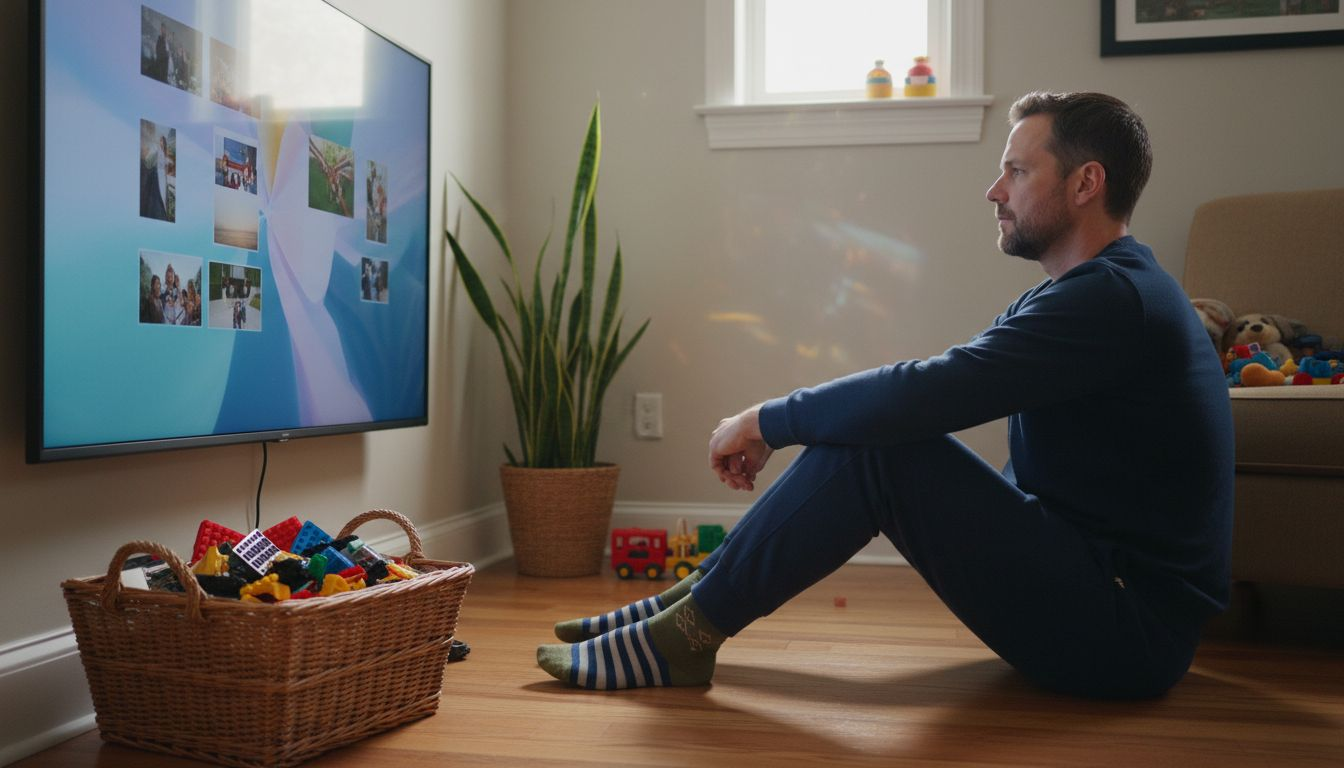
Interactive Digital Installations take personalization further by creating experiences that adapt in real time based on viewer interaction. These aren’t simply images that change; they’re artworks that sense your mood, track your movements, and adjust their visual presentation accordingly. Imagine a piece that brightens when you smile, shifts colors based on the time of day, or reveals different layers as you move closer to it. The customization happens through emotion recognition technology and motion sensors that make the artwork feel genuinely alive and aware of your presence.
Generative Art and AI-Assisted Creations represent a newer frontier in personalization. These pieces use algorithms and artificial intelligence to create unique compositions based on parameters you set. You provide initial inputs—a color palette, a mood, a concept—and the AI generates original artwork that no one else will ever own in exactly the same form. This approach appeals to collectors and creative homeowners who want something truly one-of-a-kind without requiring advanced technical skills. The beauty here is that customization becomes collaborative; you guide the AI’s direction while it handles the complex creative execution.
Here’s what distinguishes these types and why the difference matters for your space:
Here’s a summary of distinctive features among the main types of personalized digital art:
| Art Type | Key Customization | Viewer Interaction |
|---|---|---|
| Static Digital Art | Color and composition changes | Minimal, mostly aesthetic |
| Animated Art | Movement and real-time animation | Responds to environment or emotions |
| Interactive Installations | Adapts to presence and gestures | High, reacts to the viewer |
| Generative/AI Art | Machine-aided unique output | Evolving based on user input |
- Static Personalized Digital Art offers complete creative control over composition and aesthetics without requiring viewer interaction to display its value
- Animated Pieces add motion and emotional depth, creating visual interest that evolves throughout the day
- Interactive Installations provide real-time responsiveness, making your space feel genuinely intelligent and aware
- Generative and AI-Assisted Art ensures uniqueness and endless variation, perfect for collectors seeking truly original pieces
What’s remarkable about today’s personalized digital art landscape is how [computer-controlled tools facilitate customization and individualization] across all these categories. Whether you’re working with traditional digital painting software, animation platforms with emotion recognition, or AI generative tools, the underlying technology puts creative authority in your hands. You’re not selecting from preset options; you’re actively shaping what your art becomes.
The context of your space matters too. A piece in your living room might benefit from interactive responsiveness that engages guests and creates talking points. Bedroom art might lean toward calm, emotionally responsive animations that shift based on your mood and relaxation needs. A home office might feature generative art that subtly changes throughout your workday, keeping your environment mentally stimulating without distraction.
The convergence of personalization and technology means you’re not limited to choosing art created by others. You become a co-creator, making intentional decisions about how your visual environment looks, feels, and responds to you. Your unique memories, preferences, and emotional landscape get translated directly into the art adorning your walls.
Pro tip: Start with one category that resonates with your lifestyle—if you love photography, try animating a meaningful image; if you enjoy experimentation, explore generative art—then expand your personalized collection once you understand which types enhance your space most effectively.
How AI Enhances Art Interaction
Artificial intelligence has fundamentally transformed how you interact with digital art, moving it from static viewing to dynamic, responsive engagement. AI doesn’t simply create prettier images or faster processing; it fundamentally changes the relationship between artwork and viewer. When you stand in front of traditional art, you observe. When you stand in front of AI-enhanced digital art, the art observes you back. It recognizes your emotional state through subtle facial expressions, tracks your movements, adjusts its visual presentation in response to your presence, and creates a genuine conversation between you and the piece on your wall.
The power of AI in art interaction lies in its ability to [adapt and respond to viewers], creating artworks that feel genuinely alive and aware. Consider how this works in practical terms. Your digital art frame uses emotion recognition to detect whether you’re smiling, concentrating, relaxed, or anxious. Based on that emotional input, the artwork shifts its colors, intensifies its animations, or changes its visual narrative entirely. A landscape piece might intensify its colors when you appear happy, creating visual harmony with your mood. An abstract composition might slow its animations when it senses stress, offering visual calm when you need it most. This isn’t preprogrammed rigidity; it’s genuine responsiveness that makes the art feel like it understands you.
Beyond emotional recognition, AI enhances interaction through [artworks that evolve and respond dynamically], creating experiences that never feel exactly the same twice. Traditional art hangs on your wall unchanged for years. AI-assisted digital art evolves. It learns your preferences over time, shifting which colors appear more frequently, which animations you seem to engage with most, and which visual styles match your emotional patterns. The technology handles the complexity of generative algorithms and real-time processing while you experience only the result: art that feels increasingly personalized the longer you live with it. This creates what researchers call artistic collaboration, where the AI contributes creative execution while your presence and emotions shape the final experience.
What makes this interaction model especially valuable for tech-forward homeowners is how it bridges creativity and technology without requiring you to understand the underlying systems. You don’t need to know how emotion recognition algorithms work or how generative models create variations. You simply experience the result: art that responds, adapts, and evolves based on your life and your moods. The technology handles the technical complexity, processing data locally on your device to maintain privacy while delivering real-time responsiveness.
The interaction enhancement extends beyond individual pieces too. Imagine multiple AI-enhanced artworks throughout your home, each learning your daily patterns and preferences. Your living room piece might energize during evening hours when you entertain guests, shifting to calmer tones when you typically relax. Your bedroom art adjusts to your sleep cycle, providing gentle visual transitions that support healthy rest patterns. Your office installation adapts throughout your workday, providing mental stimulation during focus hours and calm visual breaks during breaks.
Here’s what AI interaction brings to your digital art experience:
- Emotional responsiveness that makes artwork feel genuinely aware of your presence and state of mind
- Continuous evolution that prevents pieces from becoming static or familiar in ways that lose impact
- Personalized learning where the art understands your preferences and adapts accordingly over months and years
- Privacy-first processing that analyzes your expressions and movements locally without sending data to external servers
- Seamless technical complexity where sophisticated algorithms run invisibly, leaving you focused on creative experience
The authenticity question surfaces here too. Some view AI-assisted art as less authentic because algorithms contribute to creation. But this perspective misses the reality: the most important creative decision is yours. You choose which images to upload, which emotions to cultivate in your space, which artistic direction resonates with your identity. The AI executes that vision with technical sophistication you couldn’t achieve manually. It’s collaborative creativity where both human intention and machine capability create something neither could alone.
Pro tip: Spend your first week observing how your AI-enhanced art responds to different moods and times of day, then intentionally adjust your settings to amplify the emotional or visual effects that resonate most strongly with your lifestyle and aesthetic preferences.
Privacy and Control in Digital Art
Privacy isn’t a secondary concern in digital art—it’s foundational to owning and enjoying personalized pieces. When you upload your family photos, wedding memories, or deeply personal artwork to a digital art platform, you’re trusting that system with irreplaceable content. The difference between platforms matters enormously. Some cloud-based services process your images on remote servers, creating copies scattered across data centers worldwide. Others keep everything local, processing on your device itself, ensuring your memories never leave your home. For affluent homeowners investing in personalized digital art, understanding where your data lives and who can access it directly impacts your peace of mind and creative freedom.
The technical architecture of your digital art system determines your actual privacy. Local processing means your device handles all the computational work, from emotion recognition to animation generation, without transmitting your images to external servers. Your facial expressions are analyzed on your device, then that data disappears. Your personal photographs never travel through the internet. This approach requires more powerful hardware but delivers genuine privacy. Cloud processing, conversely, means your images upload to company servers, get analyzed there, and technically could be stored, backed up, or accessed by service providers. For many users, this trade-off feels acceptable. For others protecting family privacy or proprietary artwork, local processing becomes non-negotiable. The choice reflects your comfort level with how your creative content gets handled and stored.
Ownership and authorship questions deepen when AI enters the creative process. If you upload a photograph and AI animates it, who owns the resulting artwork? If you use generative AI to create original compositions, can you sell or copyright that work? These questions intersect with broader concerns about [data privacy for creators and users], creating genuine complexity around rights and control. Current practice varies wildly. Some platforms claim ownership of anything created using their tools. Others grant full ownership to users. Blockchain technology offers one solution, creating immutable records of creation, ownership transfer, and authenticity that can’t be disputed later. Understanding your platform’s ownership terms before investing in personalized digital art prevents painful disputes down the road.
Control extends beyond privacy into how you manage your creative content. Quality platforms provide granular controls over what data gets collected, how long it’s retained, and whether it can be used for training AI models or improving algorithms. You should be able to see exactly what information the system collects about you—emotion recognition data, viewing patterns, preference logs—and delete it whenever you choose. This isn’t paranoia; it’s basic digital hygiene for someone protecting personal creative work. Your aesthetic preferences, emotional patterns, and visual interests are deeply personal information that deserves protection equivalent to financial data or health records.
Here’s what you need to verify about any digital art platform:
- Data storage location – Does the system process everything locally on your device, or does it send information to cloud servers?
- Encryption standards – How is your data protected during transmission and storage?
- Ownership clarity – Who legally owns artwork you create or customize?
- Data retention policies – How long does the system keep your information, and can you request deletion?
- AI model training – Will your data or artwork be used to train algorithms or improve the system?
- Third party access – Can the company share your information with partners, advertisers, or government agencies?
- Transparency reporting – Does the company publish information about data requests or privacy practices?
The most sophisticated digital art systems balance functionality with privacy protection. They employ emotion recognition locally on your device rather than in the cloud. They use end-to-end encryption for any data that does travel. They clearly state that your personal images remain your property, never used for training or commercial purposes. They provide easy data deletion. They don’t sell your information or creative content to third parties. This approach requires more investment from the company but delivers the security and control you deserve when storing personal memories and creative work.
For collectors and serious digital art enthusiasts, consider how authorship and attribution matter for future value. If you create something remarkable and want to prove you created it at a specific time, blockchain-based systems provide cryptographic proof. If you want to sell digital art or license it commercially, clear ownership terms prevent legal complications. These considerations might feel distant when you’re simply enjoying personalized art in your home, but they become critical if your pieces gain significance over time.
Pro tip: Before committing to any digital art platform, request a complete privacy policy, review their data retention practices, and test their deletion features with non-critical content to confirm they work as stated.
Comparing Digital and Traditional Customization
Choosing between digital and traditional customization means understanding not just the end result, but the entire creative journey and experience. Traditional customization has defined how we’ve created personalized art for centuries. A commissioned portrait artist spends weeks understanding your face, your personality, your vision. They sketch, refine, paint, and continuously adjust based on your feedback. The result hangs on your wall as a singular, irreplaceable object that exists nowhere else. Digital customization follows an entirely different path. Instead of months of studio work culminating in a final product, digital tools enable you to create, modify, and evolve artwork in minutes. You upload a photograph, the system animates it, you adjust parameters, and within hours you’re experiencing interactive art that responds to your emotions. The philosophical difference between these approaches shapes everything from cost to creative control to how your art evolves over time.
The technical capabilities separate digital and traditional customization in fundamental ways. [Digital tools enable iterative, precise, and complex customization] that would be impossible with physical materials. If you commission a traditional oil painting and decide midway through that you want the background color changed, the artist must repaint entire sections, potentially compromising the original vision. Digital art? You adjust a color value, and the change applies instantly across every frame of animation. You can experiment with a hundred variations in the time it takes a traditional artist to complete one. This iterative flexibility means digital customization favors exploration and experimentation, while traditional customization rewards patience and singular vision. Neither approach is superior; they serve different creative temperaments and timelines.
Consider the practical implications for your home. Traditional customization typically requires substantial upfront investment. A high-quality commissioned portrait costs thousands of dollars and requires multiple sessions. Once completed, it’s finished. It won’t change, won’t learn your preferences, won’t respond to your mood. Digital customization requires smaller upfront investment but ongoing engagement. The piece evolves continuously, learning your patterns and adapting over months and years. A traditional painting becomes a cherished memory frozen at a specific moment. Digital art becomes a living relationship that deepens the longer you interact with it.
Tactile authenticity represents a crucial distinction that many collectors prioritize. When you touch a traditionally customized painting, you feel actual brushstrokes, texture, the artist’s physical presence embedded in the work. That tactile reality carries profound emotional weight that technology cannot replicate. You own a physical object with genuine scarcity; only one original exists. Digital art, conversely, exists as data that could theoretically be copied infinitely, even though blockchain and encryption technologies now create unique digital ownership records. Some collectors find digital ownership less authentic for this reason. Others see the interactive responsiveness and continuous evolution as a form of authenticity that surpasses static paintings.
Here’s how these approaches compare across key dimensions:
Below is a side-by-side practical comparison of digital versus traditional art customization:
| Factor | Digital Customization | Traditional Customization |
|---|---|---|
| Creation Speed | Fast, often hours or days | Slow, weeks to months |
| Revision Ease | Instantly adjustable | Labor-intensive changes |
| Longevity | Continuously updates | Fixed once complete |
| Ownership Proof | Supported by blockchain | Physical uniqueness |
- Creation timeline – Traditional takes weeks or months; digital happens in hours or days
- Revision flexibility – Traditional requires repainting; digital allows instant modification
- Cost structure – Traditional demands high upfront investment; digital offers flexible ongoing investment
- Physical presence – Traditional provides tactile authenticity; digital offers interactive responsiveness
- Evolution – Traditional remains static once completed; digital learns and adapts continuously
- Scalability – Traditional is one-of-a-kind; digital can be reproduced infinitely (though ownership can be unique)
- Engagement model – Traditional is passive viewing; digital enables interactive participation
Hybrid approaches are emerging that combine the best of both worlds. Some artists create traditional paintings that are then digitized and animated. Others use digital tools to generate unique designs that are then physically printed or painted by hand. Some collectors commission traditional artwork and display it alongside interactive digital pieces, creating visual conversations between static and dynamic elements. These hybrid models acknowledge that both customization approaches offer genuine value, and the choice needn’t be binary.
For affluent homeowners contemplating digital versus traditional customization, consider what matters most to your creative vision. Do you value the intimate connection of working directly with a human artist? Traditional customization delivers that. Do you want art that responds to your life, learns your patterns, and evolves continuously? Digital customization excels there. Are you seeking maximum flexibility, rapid iteration, and the ability to experiment extensively? Digital wins. Do you want something tangible, physically present, with undeniable authenticity and scarcity? Traditional art provides that. The most sophisticated collectors often choose both, allowing each form to serve its unique purpose in their homes and lives.
Pro tip: If you’re drawn to digital customization but crave some tactile authenticity, consider having a favorite digital piece printed on museum-quality canvas or fine art paper, creating a hybrid object that offers digital innovation with traditional tangibility.
Unlock Your Personal Expression with Fraimie
The article highlights the challenge many face when trying to bring truly personalized, interactive digital art into their homes. Traditional decoration options remain static and unchanging while conventional digital art lacks connection to your emotions and presence. Fraimie solves this pain point by offering an innovative smart digital photo frame that uses generative AI and emotion recognition to transform your own images into vibrant, living experiences. It processes everything locally to protect your privacy while seamlessly adapting your art based on your mood and gestures. This technology puts creative control and emotional interaction directly in your hands like never before.
Experience how your wall art can respond to you in real time, evolve with your preferences, and create a deeper connection in your living spaces from your living room to bedroom and office. If you want to explore how these advanced AI capabilities enable dynamic, personalized digital art customization, see what Fraimie offers today.
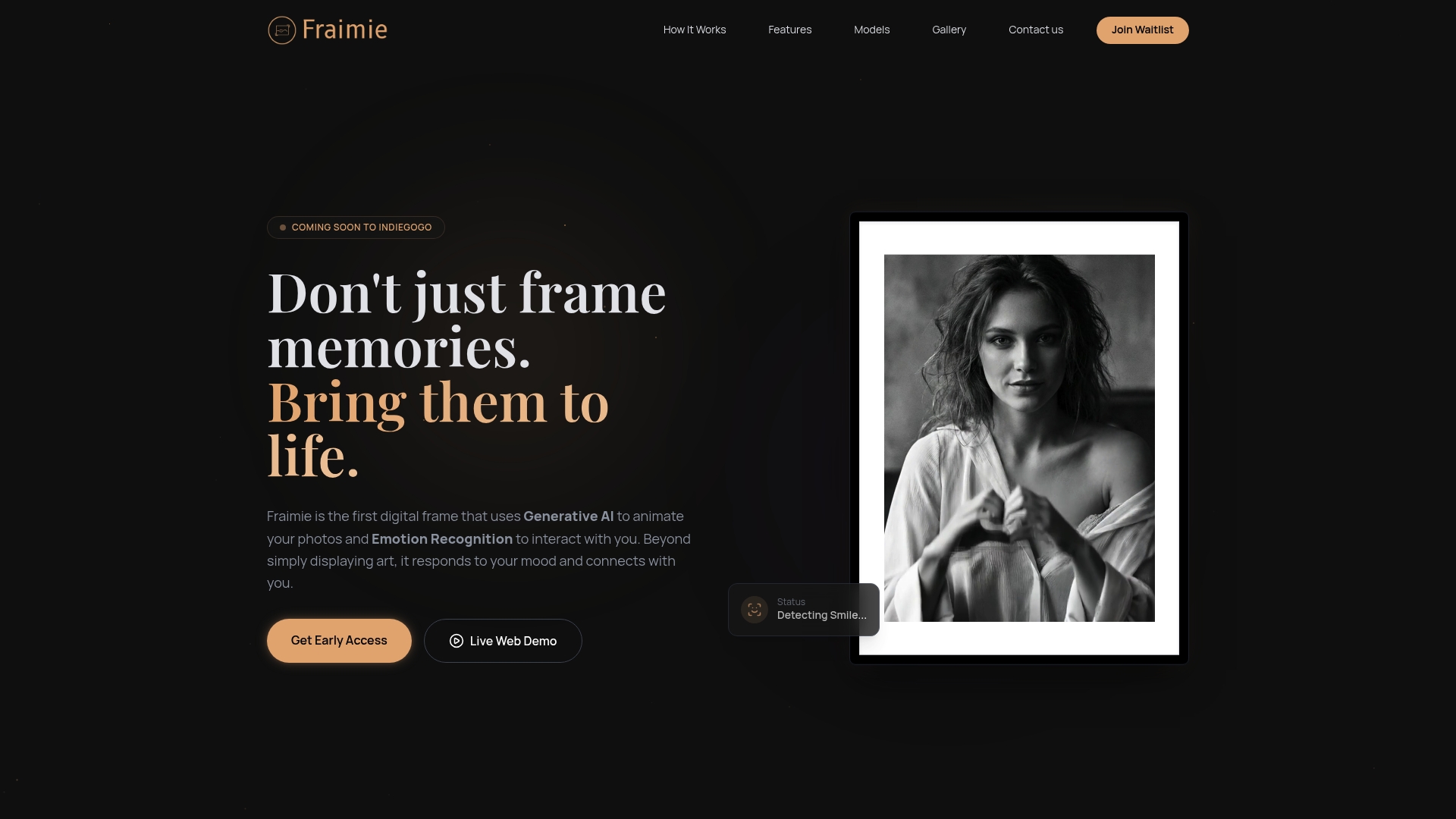
Ready to upgrade your home decor into an interactive art experience tailored uniquely for you Start your journey with Fraimie now by visiting our website. Discover the power of AI-driven digital art at Fraimie homepage and join the early adopters transforming personal expression through technology.
Frequently Asked Questions
What is digital art customization?
Digital art customization is the process of creating personalized visual expressions using digital tools and technology. It allows users to craft unique artworks that reflect their individual identity and emotions, leveraging software and AI to produce interactive and dynamic pieces.
How does AI enhance the customization of digital art?
AI enhances digital art customization by making artworks responsive to viewers’ emotions and movements. It uses emotion recognition to adapt visual narratives, create dynamic interactions, and learn from user preferences, leading to a more personalized and engaging art experience.
What are the different types of personalized digital art?
The main types of personalized digital art include animated digital art, interactive installations, and generative art. Each type offers varying levels of viewer interaction and customization, allowing users to create art that is uniquely tailored to their tastes and needs.
Why choose digital art customization over traditional art?
Digital art customization offers speed, flexibility, and interactivity that traditional art cannot provide. While traditional art is static and often requires significant time and investment, digital art can evolve continuously, respond to emotional states, and allow for rapid iterations of design without losing artistic integrity.
Leave a Reply